
Biochar Project in Nepal
Building Nepal's First Community-Based Carbon Removal Ecosystem. Since 2024, Aptech Lab and KALO Earth GmbH have been co-developing one of Nepal's first decentralized, traceable, and certification-oriented biochar carbon removal systems.
Location
Dhading, Nepal
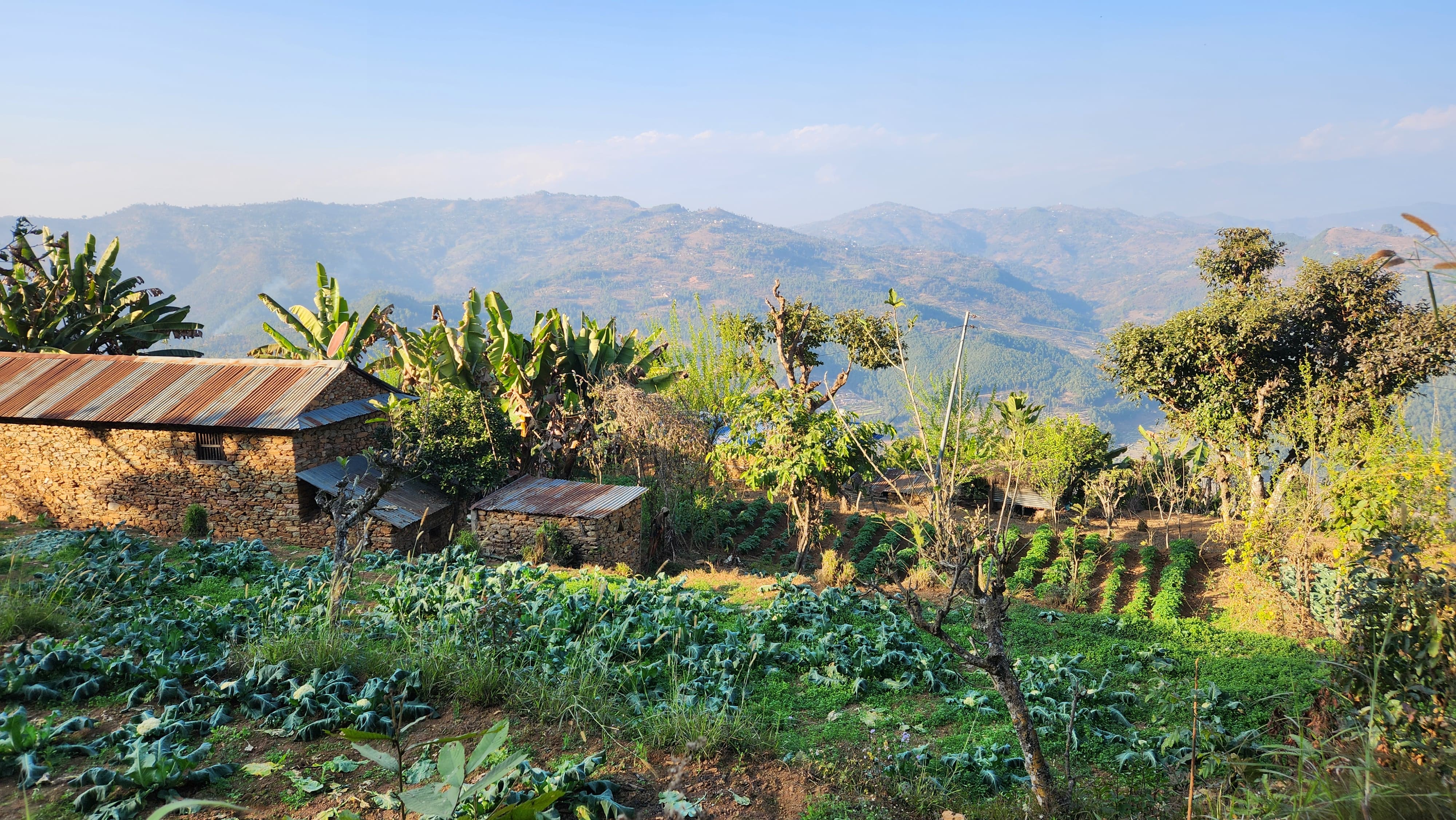
Building Nepal's First Community-Based Carbon Removal Ecosystem
Nepal is burning. Every year, thousands of tons of agricultural and forest biomass are openly burned across the country. What most people see as waste, smoke, or a forest fire risk, the world increasingly recognizes as a climate opportunity.
At the center of this shift is biochar.
Since 2024, Aptech Lab and KALO Earth GmbH have been co-developing one of Nepal's first decentralized, traceable, and certification-oriented biochar carbon removal systems. The initiative combines climate action, regenerative agriculture, rural livelihoods, and carbon finance into a single ecosystem designed for local communities.
The project began with preliminary research, scoping, and ecosystem exploration in 2024, followed by an active pilot implementation phase during 2025–2026 in Dhading, Nepal.
Technical consulting and methodological guidance have been supported by Ithaka Institute, one of the globally recognized organizations in the field of biochar and carbon removal systems.
To date, the initiative has mobilized approximately USD 50,000 in grants, philanthropic support, and ecosystem-building funding from multiple international agencies and supporting organizations.
What Is the Project?
The Biochar Project in Nepal is a community-based carbon removal and regenerative agriculture initiative that works with local farmers to convert agricultural and biomass waste into biochar using decentralized, low-cost production systems.
Biochar is a stable carbon-rich material produced through controlled biomass pyrolysis. When applied to soil, it improves soil structure, moisture retention, microbial activity, and nutrient holding capacity while locking carbon into the ground for hundreds of years.
The project is not simply about producing biochar. It is about building the systems required for Nepal to participate in the future carbon economy through:
- Farmer-centered carbon removal
- Climate-smart agriculture
- Biomass waste management
- Digital monitoring and traceability
- Community-driven implementation
- Carbon certification readiness
- Rural economic opportunities
The long-term vision is to create a scalable ecosystem where local communities can become active participants in global climate solutions rather than remaining only victims of climate change.
Why Are We Doing This?
Nepal faces interconnected environmental and economic challenges:
- Open burning of agricultural residues
- Increasing forest fire incidents
- Soil degradation and declining productivity
- Rural economic vulnerability
- Limited access to climate finance mechanisms
- Lack of localized carbon removal systems
The project emerged from a realization that the country did not merely need awareness around biochar. It needed a complete implementation ecosystem capable of moving from theory to certified carbon removal systems on the ground.
How Did We Build the System?
The project follows a decentralized implementation model centered around farmers and cooperatives.
The pilot phase was launched in Dhading district through collaboration with local farming communities and women-led cooperatives. Farmers were trained on:
- Sustainable biomass sourcing
- Safe and efficient biochar production
- Soil application techniques
- Monitoring and reporting procedures
To ensure credibility and future carbon certification readiness, the team also developed:
- Internal Control Systems (ICS)
- Standard Operating Procedures (SOPs)
- Farmer passbooks
- Digital MRV (Monitoring, Reporting, and Verification) systems
- Biomass and production traceability mechanisms
What Have We Achieved So Far?
Quantitative Achievements
- 120+ farmers trained
- 80+ active biochar producers onboarded
- Approximately 7 tons of biochar produced during the pilot phase
- Estimated 30–40 tons of biomass diverted from open burning
- Predominantly women-led participation and supervision structures
- Community-based production systems operationalized in Dhading
Qualitative Achievements
- Farmers have shown strong interest in continuing biochar production even before carbon revenues materialize
- Communities are beginning to recognize agricultural waste as an economic and environmental resource
- Women supervisors have emerged as key operational leaders
- Farmers have reported positive observations regarding soil texture and crop response
- Local communities have started demanding more training and expansion support
Perhaps most importantly, the project proved that climate solutions can become locally owned when communities clearly experience direct value.
What Is the Goal?
The long-term goal is to establish a scalable, traceable, and community-owned carbon removal ecosystem that can expand across Nepal and beyond.
- Reduce biomass burning and associated emissions
- Improve soil health and agricultural resilience
- Enable rural participation in climate finance systems
- Build Nepal's capacity in carbon removal and MRV systems
- Create decentralized green livelihood opportunities
- Position Nepal as an emerging participant in the global carbon economy
This is not only a climate project. It is an attempt to build the infrastructure, systems, and local ownership required for Nepal's climate future.
Field Gallery
Photographs from this initiative
7 photographs